Monday, November 21, 2011

Homemade Coppa / Capicola

Homemade Coppa

It goes by a number of names - Coppa, Capicola, Capocollo... Whatever you call it, it might just be my favorite cured meat. We first had this tasty cured pork treat from Boccalone Salumeria in San Francisco, and have been big fans ever since.

Given our love of Coppa, I am overjoyed that we have now been able to successfully make it ourselves. Seeing the entire process whereby a humble piece of pork shoulder is transformed into a beautiful piece of cured meat was a very satisfying experience.

Homemade Coppa

As I mentioned above, coppa is made from pork shoulder. More specifically - and where the name comes from - it uses the coppa muscle of the shoulder.

Here is the shoulder that we started with:

Homemade Coppa

The coppa muscle is on the left, on the side of the shoulder away from the bone. Here you can see it after it has been removed from the rest of the shoulder:

Homemade Coppa

The first step is a dry brining process - much like you would do for pancetta or homemade bacon. The dry brine is a simple mixture of kosher salt, cracked white peppercorns and curing salt #2:

Homemade Coppa

which gets rubbed onto the coppa:

Homemade Coppa

Then it gets wrapped in plastic wrap and refrigerated for about two weeks, or until the meat feels a bit more firm (this one took 16 days). The dry-brine is then rinsed off:

Homemade Coppa

After drying at room temperature a couple hours, the surface is evenly coated with a mild blend of ground chile: Piment d'Espelette, sweet Hungarian paprika and a little cayenne.

Homemade Coppa

Then the meat is ready to hang. We encased ours #10 elastic netting from Butcher&Packer. This helps keep its shape and makes hanging easier.

Homemade Coppa

Nicely trussed up, it went into our curing chamber / beer fridge set at 52-55 degrees fahrenheit.

Homemade Coppa

The biggest challenge was keeping the humidity where it needed to be.

We used a Sunpentown Mini-Humidifier (the white plastic doo-dad in the upper right), which was helpful, but not problem-free. It would probably work well in a large space, but even at the lowest setting it put the humidity at 90%. It would also run out of water very quickly at which point the humidity dropped to less than 50%.

We solved the problem by plugging the unit into an appliance timer and setting it to turn off and on every 15 minutes.This way we were able to start at about 80% humidity for the first couple weeks, then slowly drop it down to 65-70% over the remainder of the curing period.

After 7 weeks, the coppa had dropped from a starting weight of 2 pounds, 13 ounces to a final weight of just over two pounds - a loss of just under 30%.

Homemade Coppa

It wasn't quite ready yet, though. We put it back in the fridge for another two weeks (patience is a necessary virtue in meat curing!) to let the moisture content even out.

Then, finally, it was time! From the outside it was hard to tell how we had done, but once we cut into it we knew we had something special on our hands:

Homemade Coppa

Ruby red meat. Clean, white fat. And it tastes as good as it looks. Incredible aroma and depth of flavor.

Thinly sliced using our EdgeCraft Food Slicer, it makes a great snack on crackers or a slice of bread.

Homemade Coppa

We'll pull together our notes and write up a detailed recipe soon.

Thursday, November 10, 2011

San Felipe Shrimp Festival

San Felipe Shrimp Festival

This past weekend, the folks at the Baja California Secretary of Tourism were nice enough to whisk us down to San Felipe for the annual Shrimp Festival. Accompanying us on this adventure were fellow bloggers from 52 Perfect Days, Cuvee Corner and My Burning Kitchen.

San Felipe is a small fishing town about two hours drive south of the US/Mexico border. To get there, we crossed over from San Diego into Tijuana and drove east past Tecate, over the Rumorosa mountain pass into Mexicali, and down to San Felipe. If we were doing the drive ourselves, we would probably go out on Interstate 8 to El Centro and cross at the Calexico/Mexicali border. The distance is about the same either way, but I8 has the distinct advantage of having Alpine Beer Company on the way...

Speaking of beer, we were relaxing with one and enjoying the warm, sunny afternoon within minutes of our arrival:

San Felipe Shrimp Festival

The festival was set up along the Malecón - San Felipe's coastal boardwalk - with a stage in the center, and vendors stretching out both sides.

San Felipe Shrimp Festival

San Felipe Shrimp Festival

The first evening, we were invited to a six course dinner at the Hacienda Coral Restaurant, the highlights of which were a clam ceviche tlacoyo and a stingray cake in a black bean sauce. Unfortunately the lighting was too low to get good pictures of the food.

San Felipe Shrimp Festival

The next day we headed a few miles south of town to the "Valley of the Giants" - so named for its giant cacti.

And giant they were:

San Felipe Shrimp Festival

The huge Cardón cacti are relatives of the Saguaro. In 1992, one was airlifted to Seville, Spain to represent Mexico at the World's Fair.

We also stopped in at the marina:

San Felipe Shrimp Festival

Most of the larger shrimp boats were out fishing, but some smaller day boats were unloading their nets, and there was no shortage of fresh shrimp for sale.

San Felipe Shrimp Festival

Both lunches we had in San Felipe consisted of communal seafood "Parrilladas" - an assortment of grilled fish and shellfish. This one, at Mariscos La Vaquita, was particularly nice - shrimp, clams, several kinds of fish (one stuffed with squid), and their version of tacos gobernadores.

San Felipe Shrimp Festival

Overall, it was a great weekend. Getting across the border made it seem like much more of a getaway than you would normally get from just a few days.

San Felipe Shrimp Festival

We will definitely be back to San Felipe.

Wednesday, November 2, 2011

Some Dishes with Fishes - Round Four

We've been overdue for a "Dishes with Fishes" post for a while now, so here is a look at some of the fish and seafood we've been eating. Previous posts can be found here, here and here.

Pad Kra Praw with Mexican White Shrimp


Pad Kra Praw? Pad Kra Pao? Pad Krapow? However you spell it, this staple of American Thai restaurants is a big favorite of mine. I love the mingled intense flavors of chile, fish sauce and basil. We usually make it with chicken, but it this shrimp version was great. It is also really good with sea scallops...

Grilled Mako Shark with Black Kale and Black Beans


One day, with a bounty of Mako Shark from Catalina Offshore, we did it up two ways. This first one was grilled very simply.

Teriyaki Mako Shark with Shaved Brussels Sprouts


For the second dish, we used a teriyaki-style marinade, and served it with shaved brussels sprouts from our garden.

Pan-seared Cabrilla Grouper with "Pil-Pil" Potatoes and Green Beans


"Pil-Pil" potatoes have become a favorite of ours. We call them that because we first made them after we saw them as a side in a video about making salt cod in the Portuguese "Pil-Pil" style. They went very nicely with this Cabrilla Grouper.

Whole Cardinal Snapper with Chard and Black Beans


We have been really happy with the whole Cardinal Snappers we've been getting from Catalina Offshore and have been experimenting with different ways to cook and serve them.

Whole Roasted Cardinal Snapper Stuffed with Rosemary and Thyme


This version was super moist and flavorful, and the beautiful color of the skin still really came through after cooking.

Tacos Gobernadores with Mexican White Shrimp and Sea Scallops


Tacos Gobernadores, which I think of as shrimp tacos with peppers, onions and cheese, are a staple at local mariscos trucks. This was our take - with some sea scallop thrown in for good measure.

Smoked Bay Scallops and Assorted Fish


Smoked bay scallops are an awesome treat that we first started making this year. They definitely have an "I'll just eat one more" quality to them. Good stuff. This time we also smoked an assortment of fish - we often have pieces left over, and smoking is a great way to use them up.

Friday, October 21, 2011

All Grain Brewing on the Stovetop, and a "Half Nelson" IPA Recipe

Half Nelson IPA

We've been wanting to try all grain brewing for quite some time now. Moving to partial mash brewing made a huge difference in the quality of our beers, and we were curious about how much more we could gain from going all grain.

But, every time we thought about taking the plunge, we always balked at the logistics. A 5-gallon brew pot wouldn't fit on our stove top, so we'd need to get a burner for the patio. Then the hassle of getting the three-tiered set up of hot sparge water above the grain bed to be drained into a huge brew pot. And finally, trying to cool the big 5-gallon pot of wort, then lugging it into the house to transfer to the carboy for fermentation... It just seemed like too much.

Then one day a simple solution occurred to us - we could just do a half batch! Essentially, doing a standard partial mash but omitting the extract and keeping the final batch size at 2.5 gallons gets you an all grain beer.

The obvious drawback is that you only get 2.5 gallons of beer, while doing almost the same amount of work as for a 5 gallon partial mash. But still, it is all-grain brewing on the stovetop with no more equipment than you need for partial mash.

We happened to have some Nelson Sauvin hops on hand, so we decided to brew a beer featuring them. The result was a very nice, light (both in color and body - it is lighter than it looks in the photo) and clean tasting beer. Was it better than what we get with partial mash? Hard to say, since we've never worked with the Nelson hops before. We will have to give the technique a try with one of our more standard IPA recipes.

Given the half batch, and the use of the Nelson, we couldn't possibly have named the beer anything other than "Half Nelson" IPA.

Half Nelson IPA

Total batch size = 2.5 gallons; All Grain Mash in 3 gallon beverage cooler; 2.5 to 3 gallon 60 minute stove-top boil; dry hopped for aroma; target abv of 6%.

Ingredients:
6 lb 2-Row Pale Malt
1/4 lb Wheat Malt
1/4 lb Carapils/Dextrin Malt
2 oz Nelson Hops (8.0% AA)
1/2 oz Centennial Hops (8.8% AA)
3/4 oz Simcoe Hops (12.3% AA)
1 tablet Whirlfloc
White Labs WLP051 California Ale V Yeast


Hop Schedule:
1/4 oz Centennial - 60 minutes boil
1/4 oz Centennial - 45 minutes boil
1/2 oz Nelson - 45 minutes boil
1/4 oz Nelson - 30 minutes boil
1/4 oz Simcoe - 30 minutes boil
1/4 oz Simcoe - 15 minutes boil
1/4 oz Nelson - 2 minutes boil
1 oz Nelson- Dry Hop in Secondary Fermenter
1/4 oz Simcoe - Dry Hop in Secondary Fermenter


Heat 8 quarts water to 167 degrees for a target mash temperature of about 152 degrees. Place the crushed grain (2-Row Pale, Wheat and Carapils) into a large mesh bag. Pour the hot water into the beverage cooler, then lower the grain bag into the water very slowly, pushing and prodding with a large spoon to ensure all the grain is wet (this can take several minutes). Put the lid on the cooler and allow to rest 60 minutes.

While the grains are mashing, heat another 5-6 quarts of water to 180-185 degrees for sparging (rinsing the grains). Near the end of the 60 minutes, heat 2 quarts of water to a boil in your brew pot.

After the first mash is complete, remove the cooler lid and open the spigot to draw off about 2 quarts of wort into a large pitcher. The first few draws will likely be cloudy with grain particles; pour it gently back into the cooler over the grain bag to help filter it. Draw off the remaining wort by the pitcher-full and carefully pour that wort into the boiling water in your brew pot; continue until only a trickle of wort leaves the spigot. Pour about 5 quarts of your hot sparge water over the grain bag in the cooler. Gently lift the bag up and down to thoroughly re-wet the grains (but don't slosh). Cover and let sit about 5 minutes. Use the spigot and a pitcher to draw off all of the second wort and add it to your brew pot.

You should have about 3 gallons of wort. Bring the wort to a boil and add hops according to the schedule. With 15 minutes remaining in the boil, stir in 1 tablet Whirlfloc. At time zero, remove the pot from the heat, cover and let sit 10-15 minutes.

Move brew pot to an ice bath and cool quickly to less than 80 degrees. Transfer wort to a primary fermenter (straining off the hops if desired). Add water to reach the 2.5 gallon mark if necessary. Swirl vigorously then pitch the yeast.

Ferment in primary for 1 week, then transfer to secondary. After seven days, dry hop with 1 oz Nelson and 1/4 oz Simcoe. Bottle or keg after fermentation is complete (2 to 3 weeks in secondary).

Friday, October 7, 2011

Sonoran Hot Dogs at Papa Locos in Tucson

Sonoran Dog at Papa Locos

If you need a quick bite to to eat in Tucson, a Sonoran hot dog is a pretty good way to go. Coming west into south Tucson on I10, we took a quick detour north to check out Papa Locos.

Papa Locos in Tucson, Arizona

Papa Locos lives in a little side addition next to a Valero gas station's convenience store. There are a variety of items on their menu, but the Sonoran hot dog was our focus.

Sonoran hot dogs (named after the Mexican State where they originated) are Tucson's version of the bacon-wrapped hot dog. To me, the primary factors that differentiate the Sonoran dog from its cousins are the addition of pinto beans and jalapeño sauce and the distinctive bun (which has the texture of a standard hot dog bun, but is shaped more like a bolillo).

Sonoran Dog at Papa Locos

Probably the most well-known place for Sonoran dogs in Tucson is El Guero Canelo, but I found Papa Locos' version to be superior in pretty much every way. The meat, beans and chile sauce each have their own intense flavor, and the combination is fantastic.

Papa Locos' Sonoran dogs go for $2.99 a pop. One each wasn't quite enough for lunch, so Sherry and I split a caramelo (a kind of mini-quesadilla) to pad out the meal.

Highly recommended.

Papa Locos
8201 South Rita Road
Tucson, Arizona
(520) 663-3333 ‎ 

Monday, October 3, 2011

Green Chile Cheeseburgers at Monroe's and Blake's Lotaburger

Monroe's in Albuquerque

Road tripping through New Mexico means that Green Chile Cheeseburgers are very much on the agenda. This trip, we had two.

First up was Monroe's, in Albuquerque. I chose Monroe's because it was well-reviewed and within walking distance of our hotel (Casa de Suenos, which I highly recommend). When we arrived, the place was pretty dead. Undeterred, we entered into the harsh, florescently-lit room and sat down.

Green Chile Cheeseburger at Monroe's

You can see the green chile cheeseburger above, served with sweet potato fries (I ordered regular fries). Overall, it disappointed. Not enough green chile for the flavor to really come through, and the burger itself was the thin, frozen puck style you would buy at Costco. It was decently prepared, though, and I had no trouble eating it. Unfortunately, the same couldn't be said about their carne adovada, which we also tried - way too salty, and lacking in flavor.

Overall, it was a pretty bad dining experience. Monroe's seems like a place that has seen better days, and it would be hard to recommend based on our visit.

The next day, we had a much better meal at Blake's Lotaburger in Deming:

Blake's Lotaburger in Deming

We wrote about the green chile cheeseburger at Blake's a few years ago, and this visit was nearly identical. Here is the Lotaburger with double meat, add cheese and green chile:

Green Chile Cheeseburger at Blake's Lotaburger

The amount of green chile was perfect, with tons of chile flavor and a good amount of heat.

Green Chile Cheeseburger at Blake's Lotaburger

There is nothing complicated about this burger - just a better-than-average fast food burger, well prepared, and with the key addition of chopped up Hatch green chile. If someplace in San Diego puts a burger like this on their menu, I will happily give them my money on a regular basis.

Monroe's
1520 Lomas Blvd. NW
Albuquerque, New Mexico
(505) 242-1111
Blake's Lotaburger
600 North Gold Street
Deming, New Mexico
(575) 544-7302

Thursday, September 29, 2011

Ska Brewing's 16th Anniversary and Breakfast at the Durango Diner

Ska Brewing 16th Anniversary

After a few days of camping and hiking in Canyonlands National Park with our friends Elise and Tom, we all headed out to Durango for a few days of relaxation.
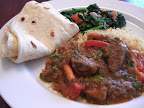
As it turns out, it was Beer Week in Durango, and to cap off the week, Ska Brewing held a party to celebrate their 16th anniversary. Ska has a great facility, with a nice tasting room and grassy grounds.

Headlining the appropriately ska-themed band lineup at the party were The Toasters, who were celebrating their 30th anniversary. Ska brewed a special black IPA for the occasion, and it was quite tasty.

The Nuns of Brixton at Ska Brewing's 16th Anniversary

Also playing were the Nuns of Brixton - a band dressed as nuns covering Clash songs. Very entertaining.

The next morning, we needed some nosh before heading out of town, so we stopped into the Durango Diner.

Durango Diner

The place was jam packed. They were serving food not just for the diner, but also for a bar down the street. Despite the mayhem, the staff did a great job of managing the situation.

Durango Diner

I'm not sure how much of it was hunger and how much of it was the food, but when I finally got to tuck into my green chile breakfast burrito, I was a very happy man.

Green Chile Breakfast Burrito at the Durango Diner

Smothered in green chile sauce (mostly mild, but with the occasional kick from a chunk of chile), the burrito was filled with beans, ground beef and egg. Probably not up there in my breakfast burrito hall of fame, but it made for a very satisfying breakfast in a friendly local spot.

Ska Brewing Company
225 Girard St
Durango, Colorado
(970) 247-5792
Durango Diner
957 Main Avenue
Durango, Colorado
(970) 247-9889