Showing posts with label offal. Show all posts

Thursday, December 7, 2023

Langkawi - Cenang Food Truck Square

The island of Langkawi, and more specifically the Pantai Cenang area, is a tourist center. It is also in a bit of a slump, which has resulted in a lot of touristy restaurants that aren't very busy. It took a while for us to get our footing here food-wise.

Our first success was finding this small cluster of trucks busily serving up food to a mixture of locals and tourists.

One night we ordered some sticks of satay - some chicken skewers, a "chicken bone" skewer, and a chicken liver skewer.

Simple, and tasty.

We also patronized a woman who was making a variety of thai salads.

We got an order of som tam and it was really good. Perfect refreshing flavors with just the right amount of heat.

We returned another night and got a different dish from the same lady - a seafood salad.

Shrimp and squid in som tam style dressing. Very good.

Wednesday, November 29, 2023

Goerge Town - Belacan Fried Chicken and Hai Koay Teow Soup

Doing my research on George Town, I'd read that Kimberly Street was *the* food street. While that may have once been the case, it now is fairly subdued - with more active street food areas in other parts of the city. Still, there was good food to be found there, and one evening we stopped in to try a few things.

First we got some fried chicken from the "Belacan Fried Chicken" stand. "Belacan" means "shrimp paste" - not sure if that was supposed to indicate a flavoring for the chicken? I didn't taste shrimp, but the seasoning was super good, and the chicken was moist and piping hot out of the fryer.

Right across the street, Hai Koay Teow Soup was doing brisk business.

We snagged one of the last free tables and put an order in. Looking around there were lots of others sitting waiting for food. They meticulously put out bowl after bowl and we were finally rewarded with ours.

Well worth the wait. Full of goodies. Rice noodles, fish balls, fish cakes, pork slices, liver slices, minced pork...

Great bowl of noodles.

Friday, January 12, 2018

Singapore - Hainanese Chicken Rice and Steamed Fish Head at Chinatown Food Centre


Having already had Kaya Toast for breakfast, and a big lunch at Tiong Bahru Market, we ended up going out a bit late for dinner at Chinatown Complex Food Centre. Because of the time, a lot of the stalls had already closed up and the pickings were a bit slim.


We ended up grabbing a very serviceable Hainanese chicken rice dish from Yi Ding Hao.


It was also quite reasonably priced and came with a generous side of vegetables.


Right next to Yi Ding Hao was as stall called Heng Kee Cantonese Cooked Food and we couldn't resist ordering their steamed fish head in bean sauce:


The fish was succulent and delicious. The sauce was good, but a bit on the sweet side for me.


We only had one fish eyeball between the two of us, so I chivalrously let Sherry have it.

Tuesday, December 27, 2011

Leftover Stuffing Frittata

Leftover Stuffing Frittata

After our Christmas Eve seven-fish feast (more on that to come) and a big Christmas Dinner (Turkey - since we had fish for Thanksgiving), we wanted something simple last night.

We had some Turkey liver left over, which we chopped up and fried in some butter. Then we added some leftover stuffing from our Christmas turkey. Add some beaten eggs and parsley on top and voila - stuffing frittata.

Leftover Stuffing Frittata

Quick, easy and very tasty.

Tuesday, November 2, 2010

My New Camera Takes Offal Pictures

Smoked Pork Tongue

For years now, I've been plugging away with my little canon point-and-shoot while coveting each new generation of digital SLR cameras that comes out. Last week, I finally took the plunge and gave myself an early birthday present in the form of a Canon T2i.

What better way to break in the new toy than with some pictures of tasty pig parts? Pictured above is smoked pork tongue with a vinaigrette. We were making Coppa di Testa and had a tongue leftover, so we brined it and smoked it at the same time as some slabs of bacon we were doing. Good stuff.

Speaking of the testa, we did a post on Warm Testa with Waxy Potatoes (a recipe from the Babbo Cookbook) way back in 2007. It was a good then, and it is still a good dish now:

Warm Testa with Waxy Potatoes

And we never make a batch of testa without doing some Testa on Toast...

Testa on Toast

So far I'm really pleased with the new camera, although I haven't done much beyond fully automated shooting yet. It does hi def video, so we might have to try our hands at some food in motion. We'll see...

Monday, April 26, 2010

Uni and Eggs

Uni and Eggs

When Sherry went by Catalina Offshore Products this past Friday to pick up some fish (grouper and yellowtail - both were fantastic) she also grabbed a tray of uni. I'd been looking forward to trying uni for some time now  - admittedly with some trepidation, as I find the idea of eating sea urchin gonads a bit off-putting.

This is what the uni looks like in the wooden tray it comes in:

Uni from Catalina Offshore Products

The verdict? At the risk of losing what foodie street-cred I may or may not have, I have to confess that I'm not a fan. We first tried them straight-up. I can see why lots of people like them - they have a sweet, rich taste of the sea about them. But I just couldn't get past the texture.

We also gave them a try in eggs - with much the same reaction from me, I'm afraid. And while Sherry liked it considerably more than I did, I don't think uni is going to find a regular spot in our rotation. The offal in our eggs is more likely to come from larger creatures.

For some more positive takes on local uni, have a look at this post from Dennis, and this one from Kirk.

Thursday, October 15, 2009

Cabeza

Carnitas Taco

Sherry did a run out to Northgate Market recently, and came back with a bounty of pork products, including half a head. We popped the head in a pot, and slowly simmered it along with some tongues and trotters. Part of the results went into tacos, which were rich, sticky and very satisfying.

The rest went into a small batch of Testa (head cheese):

Coppa di Testa

We had warmed Testa on toast for breakfast this morning, and it really hit the spot.

Warm Testa on Toast

You can find more details on making Testa, along with our recipe for it here: Coppa di Testa.

Thursday, October 1, 2009

Lamb Offal Treats

Sauteed Lamb Kidneys with Onion, Garlic and White Wine

We've had a package of assorted lamb offal tucked away in our freezer for a while now, and we finally got around to putting it to good use. Pictured above is Sautéed Lamb Kidneys with Onion, Garlic and White Wine, from Essentials of Classic Italian Cooking by Marcella Hazan. This was the first time we've tried to cook kidneys, and the dish came out very well. Kidneys, like liver, have a very strong, intense flavor which I really enjoy, but can't eat too much of in one go. Perfect for an appetizer.

After that, we improvised a dish with lamb's heart - we sliced it, seared it quickly, and served it over a potato purée spiced with turmeric and cinnamon with some arugula mixed in.

Lamb's Heart with Turmeric and Arugula Potato Puree

I really love heart in general (beef, chicken, pork - you name it), and this proved no exception. Very good, and it went nicely with the potato - we'll definitely be making this again.

While cooking the previous two dishes, we had lamb tongue simmering in a pot on the back of the stove. The next day, we used it to make tacos:

Lamb Tongue Tacos

Oh yeah!

Tuesday, June 30, 2009

Incanto - San Francisco

Incanto

On one of the nights we spent recently in San Francisco, we hopped the J Church streetcar and escaped Union Square - heading out to the Noe Valley neighborhood for dinner at Chris Cosentino's restaurant, Incanto. Being big fans of pig parts served up in any and all forms, Incanto is a place we've been wanting to visit for a while now.

We shared three appetizers and a small pasta. Here's the rundown:

Antipasto platter for two Charcuterie Plate at Incanto

In addition to Incanto, Chris and his business partner Mark Pastore run Boccalone, a salumeria located in the San Francisco Ferry Building. The antipasto platter is a selection of Boccalone meats along with some veggies. This incarnation had french country pâté, mortadella, capocollo, and coppa di testa, served with breakfast radishes and roasted carrots, shallots and garlic. There was also a dollop of Boccalone's house-made mustard.

The star of the show for us was the capocollo (they favor the Neapolitan spelling) - paper-thin slices of ruby-colored pork, striped with clean white fat. Beautiful and very, very tasty. We also really liked the mortadella - velvety textured, faintly aromatic with spices and studded with the occasional pistachio and peppercorn. It was probably the best rendition I've had. The only disappointment on the plate was the coppa di testa - a complete lack of seasoning prevented any of the flavors from coming through. On the balance, though, a very good dish.

Calf's brain, porcini, Douglas fir & mugolio Calf Brains and Porcini at Incanto

This was probably our favorite dish of the meal. The bites of calf's brains had a light, crisp coating and were nicely set up. The porcini were quite mild in flavor, but were very visually appealing and had good texture. The complex sauce brought everything together. Our first brain experience, and definitely not our last.

Trotter cake, red wine braised snails & watercress Trotter Cake with Braised Snails

Sadly, this one was a clunker. The interior of the trotter cake had a pleasant gelatinous texture dotted with small bits of meat, but the expected porky flavor was muted due to a lack of seasoning and the outside of the cake was thick, gummy, and unpleasant. The snails dotting the plate were rubbery and neither the red wine nor the watercress sauce had much flavor.

Spaghettini, Sardinian cured tuna heart, egg yolk & parsley Spaghettini with Sardinian Cured Tuna Heart and Egg Yolk

We really enjoyed our final selection of the evening - perfectly cooked pasta that was generously topped with deeply flavored shavings of salty, cured tuna heart. Nestled in the center was a fresh egg yolk waiting to be mixed through. As a follow-up to the under-seasoned trotter dish, the salty flavor here was quite aggressive, and very welcome.

Along with our food, we enjoyed several wines from their Italian-centric list - comprised of an interesting selection of regions and varietals that we don't often drink. Service (we sat at the bar) was friendly, pleasant and efficient - provided by the bartender who also ventured out as sommelier for the rest of the restaurant.

Overall, a very enjoyable if somewhat flawed meal. Providing an ever-changing menu with a nose-to-tail focus is, I am sure, something that is difficult to execute consistently. The promise of an exciting new dish is well worth the risk of having a poor one, however. We definitely plan to eat here again.

Incanto
1550 Church St.
San Francisco, California
(415) 641-4500

Friday, March 20, 2009

It's Been An Offal Week...

Lamb's Liver Portuguese-Style

We purchased a few goodie-bags of assorted organs from Da-Le Ranch a while ago, and finally got around to starting to make use of them this week. Pictured above is a Lamb's Liver dish we cobbled together from recipes in several Portuguese cookbooks.

The liver was marinated in white wine and lemon juice, cooked in bacon fat, sauced with the reduced marinade, topped with the bacon, and served family-style over sauteed onions. We really enjoyed the way it turned out - it had a fantastic depth of flavor.

Another meal had us working with Pig's Heart:

Pig's Heart

We used a Chris Cosentino recipe for grilled heart with roasted beets and horseradish. It called for beef heart and golden beets (we used red) but I'd guess that Chris wouldn't mind the substitutions - he'd probably just be pleased to see someone cooking heart.

Grilled Pig's Heart with Roasted Beets and Horseradish

All of the elements came together really well. We had it as a main dish, but it would probably be better as a starter as the beets get a bit overwhelming after a bit.

The next morning, we used some of the leftovers to make a "hearty" breakfast:

Pig's Heart and Egg Breakfast Sandwich

This wasn't the first time we've had "offal eggs", and it definitely won't be the last.

We also made a pâté with leftover liver and a bit of heart. We haven't tried it yet, though - we plan to use it for Banh Mi.

We still have Pig and Lamb Kidneys to cook with, but we haven't figured out exactly what we want to do with them yet...

Monday, January 12, 2009

Pig Q&A with Dave from Da-Le Ranch

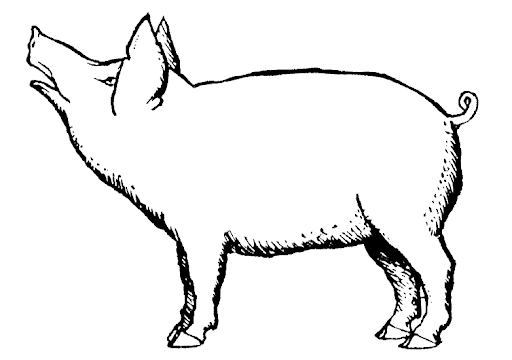
Pig

We've been looking into local sources of pork to meet our ever-expanding curing and smoking demands. Recently we had a very informative email exchange with Dave Heafner of Da-Le Ranch in Lake Elsinore. We thought that others might be interested in this information as well, so here is the conversation we had:

----- Menu in Progress: I understand that you custom raise raise pigs for individuals. We are interested in humanely raised, tasty pigs for cooking and curing (and, of course, eating). Can you give me some additional information about your ranching methods, procedures and subsequent costs?

Da-Le Ranch: We believe in humane treatment of animals, in so far as it is possible...my wife draws the line at letting them sleep in the house. :o)

Just yesterday, her favorite sow followed her around like a dog all day long, and refused to go back into the pen. "Mommie" had to chastise her to get her back in the pen. The day before, she led a rampage herd into the back yard, and had a play day in the garden and on the back porch. What a mess.

MiP: How are they housed, and what are they fed (generally)?

Da-Le: The pigs are penned, due to our rural location, and predators: bobcats, cougar (Mountain Lions), coyotes and wild dogs. The smaller pigs are allowed free ranging most of the day, but go up with mothers and into holding pens in the evening for safety. There are covers for them to get out of the rain or sun.

The little guys scurry around the farm rooting and digging everything up in their way. Fortunately, only one has discovered the worm farm, and she did so much damage she became a volunteer for a trip to the packing plant soon thereafter.

We feed blended grains and surplus/salvaged vegetables, grains and dog food. Occasionally we get a load of tortillas from a tort factory, and they love the treat. They are mostly flour and corn too. What we DON'T feed is important to know too...no institutional waste feed (slop) from schools and prisons. We'll leave that to the big commercial pig farmers.

Finally, our main philosophical outlook is, "a happy pig is a tasty pig!"

MiP: What types of pigs do you raise?

Da-Le: We have crossed breeds with the following in the background: Duroc, Lancaster, Spots, Yorkshire, and Hampshire. Of course, we didn't originally start with purebreds, so we don't know if there are any others in the mix. We do know that they taste great. My wife was not a pork eater until I slaughtered the first one we raised. With a bit of coaching, she tried a piece of pork chop, and was instantly converted. Now, after lamb and rabbit, her first love of meat is the "other white meat" - pork.

MiP: What is the season / time period involved in raising a pig? When is it harvested?

Da-Le: Generally, it takes 3 months, three weeks and 3 days for a pregnant pig to deliver the babies. They are weaned and ready for sale between 4 and 8 weeks after that. So from inception to reception (if one is purchasing a weaner) about 5 to 6 months go by.

For full sized pigs for the freezer (ranging from 250 to 350 lbs.) it takes from six to ten months, depending on the time of year, feed and other considerations.

When we're custom raising a pig for a customer, it is ready, regardless of weight, at six months. It costs us too much money to feed one longer than that.

MiP: I know that some people purchase a quarter or half pig -- can you please give me approximate costs for these options versus purchasing a whole hog? (Understanding that different breeds will have different costs).

Da-Le: The different breeds currently have no affect on the price of the pigs. We are introducing a heritage line soon, and those will be two or three times the price of the others, due to many factors.

With our current stock, a quarter and half are available almost any time. Basically, when cutting and wrapping the pig, the packing plant splits each cut into either two or four parts (depending on how many people are purchasing the pig).

Our "hanging weight" price for a pig includes slaughter, cut and packing, and is as follows:

  • 1/4 pig is $6 per lb.
  • 1/2 pig is $5.50 per lb.
  • Whole hog is $5 per lb.
We may be forced to raise these prices [soon] however, due to spiraling costs on all our feed, help, and everything else needed to raise them. Leslie and I are evaluating this....

If you want a whole pig, the pricing is different. "On the hoof" means alive, and we sell butcher/freezer pigs for $1.50 per lb. "on the hoof." We have a scale available, and you pick the pig up, pay cash and take it to slaughter.

You can have the pig slaughtered on your own, or can contract us to do it for you. The price for us to do it is $150, regardless of the size of the pig. We discount this price when someone orders more than one at a time. This charge covers transportation of the pig to the slaughterhouse, kill, clean, de-hair, and transport to the packing plant. Packing and cutting is your responsibility, and the custom butcher will call you to get your specifications for the way you want the pig prepared for your freezer. Pick up of the finished pig is your responsibility when it is finished.

MiP: Can I keep the "extras" - i.e. head, feet, ears, liver, heart...?

Da-Le: The cost above includes your getting the head, feet, ears, liver, heart, and kidneys, if you specify. We can save the intestines and stomach too (for stuffing sausages), which we can get cleaned for you when the pig is slaughtered, for an extra fee (I think that's generally $20 - $30). -----

Dave can be contacted about his farm-raised pork through his website, or you can find him at the Little Italy Farmers Market on Saturdays. Following this email exchange I met Dave at the market and learned that he not only offers USDA inspected pork, but beef and lamb as well. So far we've eaten some very tasty pork and lamb chops, and the other day we picked up some nice looking pork jowls and have plans to turn them into Guanciale. More on that later!

Update: The folks at Sea Rocket Bistro just posted a set of videos of a visit they took to Da-Le Ranch.

The picture at the top of this post was adapted from Clipart ETC at the University of South Florida. The original source was an illustration from The Wonder Clock by Howard Pyle and Katharine Pyle (New York: Harper & Brothers, 1915).

Wednesday, November 28, 2007

Coppa di Testa

Coppa di Testa

The dish we made with our goodies from Northgate Market is Coppa di Testa. The Italian version of head cheese, testa is truly fantastic stuff. It is a sort of sausage-meets-terrine made of cooked pork pieces and spiced broth set into a firm gelatin mold. Thinly sliced, you can eat it cold with crusty bread or warmed to release the gelatin broth's saucy goodness. If you can obtain the ingredients, it's surprisingly simple to make.

First you need pig's feet (trotters) to contribute sufficient gelatin to the stock. You can use powdered gelatin instead, but using the real thing adds flavor to the mix, in addition to structure.

Pigs Feet

A few pork tongues for extra meatiness (optional, but an easy addition).

Pork Tongues

And of course testa just couldn't be testa (Italian for "head") without a nice pig's head to provide loads of silky pork texture and flavor. If you are brave, you can click on the image below to see the head we used.


And from the other side:


As you can see (if you peeked), we used a half a pig's head, split down the middle. None of our recipe references commented on the brain, so we were wary and discarded it.

Our version of testa is spiced with the sweet and aromatic flavors of cinnamon, cloves, coriander, allspice and nutmeg plus the deep flavored herbs thyme, bay and parsley. Carrot, celery and onion are all standard additions to almost any stock or stew. Black peppercorns and plenty of salt round out the mix.


Everything gets simmered in a very large stockpot until the meats are tender and literally falling off the bone. We found that it's a lot like making a big pot of turkey soup, just slightly different ingredients.


When it comes out, it looks like this:


Sorting through the cooked meats for the "edible" pieces was a bit of a challenge (since neither of us is very familiar with knuckle, snout or ear) and we may have discarded some true treasures. An Italian grandmother offering a few pointers would've been appreciated.

But, after peeling the skin off the tongues and chopping everything into irregular pieces we were rewarded with a brimming bowl of yummy, sticky, bite-sized pork morsels.


Before molding the testa, scoop some broth onto a plate and chill it. If there's enough gelatin it should set up quickly and spring back when pressed. We stirred the gel in this photo so it looks a bit soft set, but you can see it's solid toward the left.


Finally, the meat goes into a mold with enough spicy gelatin broth to just cover and the whole thing gets chilled overnight.


The result - a beautifully marbled slab of porcine goodness.


Here is a slice that has been warmed on a plate until the gelatin melts into a rich, sticky sauce:


When making the testa, we relied primarily on the recipe from Paul Bertolli's Cooking by Hand, but we also referenced Charcuterie, The Whole Beast and The Babbo Cookbook.


I was amused to find that we own *at least four* cookbooks with variations on this dish. Below is the recipe we ended up with.

Coppa di Testa

A 16 quart pot is *just* big enough. Use an aggressive amount of salt, especially if you intend to eat this cold since flavors are muted at cooler temperatures. We found it was easier to slice using a serrated bread knife and when set "upright" rather than inverted.

1/2 pig's head (about 4.5 pounds)
2 pig's feet (1.75 pounds total)
3 pig tongues (2 pounds total)
6 quarts cold water (or as needed)
Several small, fresh thyme sprigs
4 bay leaves
1 teaspoon black peppercorns
1/2 cinnamon stick
4 whole cloves
25 allspice berries, cracked
1/2 teaspoon coriander seed
1/8 piece nutmeg
Several large parsley sprigs
2 celery stalks
1 large carrot, peeled and cut in half
1 small onion, peeled and cut in half
75 grams (1/4 cup) kosher salt

Rinse the head, feet (trotters) and tongues under cold water. Remove and discard the brain from the cut side of the head. Place the pig parts into a large stockpot and cover with cold water by about 2 inches. Bring to a boil and skim off the scum that floats to the top.

While the pot is heating, place the thyme, bay leaves, peppercorns, cinnamon stick, cloves, allspice, corriander seeds and nutmeg onto a small square of cheesecloth and tie into a loose bundle with kitchen twine. Tie the parsley together with twine to make it easier to remove.

Reduce heat to a simmer and add the spice bundle, parsley, celery, carrot, onion and salt to the pot. Cook gently for 2 1/2 to 3 hours or until the meats are very tender. Skim foam from the surface as needed.

Using long tongs, remove the tongues after the pot has been simmering for about 1 hour and 15 minutes. When cool enough to handle, peel and cut off the skin with a small knife. Trim away any grissle and cut the tongue meat into irregular 1/2-inch pieces. Put into a bowl with a little of the cooking liquid and keep warm in a low oven while the rest of the pork cooks.

When the meats are tender, carefully move the head and feet to a large tray to cool. Pick through the trotters and keep any bits of meat found around the knuckles. Remove all the meat from the head, plus some of the snout (not quite meat, not quite fat) and a little of the soft, tender skin pieces. Chop the meat into irregular pieces from about 1/2-inch to an inch each. Cut the snout and skin pieces smaller, about 1/4-inch. Mix the tongue pieces with the head and feet meats.

Pour the stock through a fine mesh strainer into another large pot. Scoop a large ladleful of broth onto a plate and chill to check the geletin content. When cooled, maked sure the gel has set up nicely and springs back when pressed. If not, return the stock to the heat and simmer to reduce it somewhat, then check again.

Line a loaf pan or terrine with plastic wrap and fill with the meats. Pour enough cooking liquid into the mold to completely cover, then tap the pan on the counter to try to remove trapped air bubbles. Fold the plastic wrap over the top and chill the testa overnight. To serve, remove from the mold and slice thinly. Eat at room temperature with crusty bread or on a warm plate to soften the gelatin.