Friday, March 21, 2008

Veracruz - Port of Veracruz and San Juan de Ulúa


Veracruz is, above all else, a shipping port. Our hotel looked out over the main port area, and one day after snapping the above picture we happened to see the same ship leaving from our hotel window.


The stone fortress you see in the picture below is San Juan de Ulúa.


Originally an island, and now located in, and connected to the rest of the port structures, San Juan de Ulúa was originally built in the 16th century as a defensive structure by the Spanish.


Many of the walls of the fortress are composed primarily of coral, as you can see in the section below.


For a century or so, the fortress served as a prison, primarily for political prisoners. Its thick walls and isolated location provided a perfect site.


Small stalactites have formed on the roofs of many of the rooms.


We spent several hours in fascinated exploration of the place.


It is definitely worth a visit. Our guidebook said that you could get there by bus, but there no longer seems to be one. Instead you need to catch a cab - the best place to leave from is Plaza de la Republica (just east of the Zócalo).

Thursday, March 20, 2008

Veracruz - Breakfast at Antojitos Lolita


We happened across this place while looking for breakfast our first morning in Veracruz, and boy were were glad we did. They had a bunch of variations on Mexican breakfast that we'd never had before. Have I mentioned yet that we love Mexican breakfast?

First up was Hueovos Cubanos. You can hardly even see the fried eggs under the lake of (very tasty) pureed frijoles. The fried plantains and meaty pieces of bacon were also great. In particular, we really liked the sweetness of the plantain mixed with the savory of the frijoles.


Huevos Veracruzanos was fluffy scrambled egg wrapped in corn tortillas and then also flooded with frijoles. Topped with spicy chorizo and jalepeños, drizzled with crema and sprinkled with queso fresco. Fantastic.


Since we'd had such a great breakfast on our first visit, we came back again on our last morning in Veracruz. This time it was Heuvos Motuleños - two fried eggs in a stack with ham, corn tortillas and frijoles, decorated with fried plantains and avocado slices, and topped with a few peas for good measure.


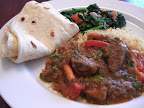
And finally, Huevos Divorciados. This wasn't a new one for us, but we like to order it in different places because it gives us a chance to taste both the green and red salsas. In this case, the red was very good and the green a bit lacking (just spicy and without much flavor). Divorciados usually come over corn tortillas, but in this case they were separated by a bed of chilaquiles instead.


Antojitos Lolita is located on 16 de Septiembre between Escobedo and E. Zapata.

Tuesday, March 18, 2008

Oaxaca - Some Miscellaneous Pictures


We bought chocolate (for making Mole Coloradito and hot chocolate) from this stand in the main Oaxaca mercado. They also had a nice variety of dried chiles, and you can see mounds of mole paste on the right.

Oaxaca's zócalo is always active and full of people, day and night.


In the park next to the zócalo, there are always a bunch of vendors selling "globos".


Maguey (Agave) plants growing in front of the Iglesia de Santo Domingo.


Nopales, fresh from our local market. We used these when we made tasajo and cecina enchilada tacos.


A truck full of garlic at the Etla market.


Flowers on a tree in the Ethnobotanical Gardens. We took a guided tour one morning and really enjoyed it.


One of the structures in the ancient city of Monte Albán. It is an easy day trip from Oaxaca, and definitely worth it - particularly if you have not been to other ruins in Mexico.


Soaking chiles and tomatillos - we soaked all of our produce in a dilute chlorine solution in order to ensure disinfection.


Nothing gets much better than a "home"-made chorizo quesadilla.


Taco stands selling tacos (mostly made from various pig face parts) and big bowls of pozole set up shop outside the main mercado at night.

Monday, March 17, 2008

Oaxaca - La Biznaga


Based on a recommendation from a couple we met in Puerto Escondido, we had dinner one night at La Biznaga. Self-dubbed as a "Cocina Mestiza", La Biznaga serves up a slightly upscale take on Oaxacan cuisine. The setting is very nice - a spacious open courtyard with a retractable roof.

We started with the "Trilogia Zapoteca" and the ""Ensalada Fresca". The Trilogia was a sampler trio of appetizers - a "Candela" (cheese and chile strips wrapped in Hierba Santa), a "Cerro Viejo" (a fried "corneto" filled with what tasted like caremlized onions) and a "Memela" (kind of like a sope, but bigger - topped with refried black beans). All were quite good, but one of each was enough. The Candelas and Cerros Viejos are available as individual appetizer plates and would likely be too much of a single thing unless shared with a group. The salad was a spinach salad with bacon, grapefruit and pecans and was lightly dressed with what tasted like honey. The flavors went very well together, and the bacon was nice and meaty.

The appetizers and salad were enough food that we didn't have room for two full entrees. Instead we ordered a bowl of the "Sopa Azteca" (tortilla soup) and the "Pescado El Duranjo". The soup was a weak version that was not very well seasoned. The fish was a salmon dish that came covered in a spicy "burnt" tasting chile sauce with orange segments. The sauce was good, but very intense. The fish was served with rice, tortilla chips and guacamole.

All in all, a very nice meal. We accompanied it with a few glasses of Chilean red wine (a merlot and a cabernet) that were both enjoyable and reasonably priced.

Sunday, March 16, 2008

Oaxaca - Dance Festival


The week we were back in Oaxaca there was a dance festival going on - the "Muestra Internacional de Danza Oaxaca". They had free exhibitions every evening, and we stopped by most days to check it out. Above is a group from Veracruz doing a "fisherman's" dance - they are carrying a net between them.

Also from Veracruz was a dance done by women balancing candles on their heads.


The last night of the festival was the "Monumenta Danza de la Pluma". Here you can see some of the "plumed" dancers.


"Chinas Oaxaqueñas" carrying baskets of religious symbols made from fresh flowers also participated in the Danza de la Pluma. It isn't clear exactly where the use of the word "China" comes from, but you can read this wikipedia article about it.


And finally another of the dancers in the Danza de la Pluma.

Saturday, March 15, 2008

Oaxaca - Mole Coloradito


The dish above is our version of Enmoladas de Pollo - corn tortillas filled with shredded chicken and then topped with Mole Coloradito.

We've become big fans of Mole Coloradito. We like it much better than the darker moles, such as Mole Negro. It isn't too sweet and has a complex savory base with a nice kick of heat. After having it in our cooking class, we wanted to try making it ourselves.

Instead of making it from scratch (which we want to do when we get home), we purchased mole paste from our local mercado. They sell it in little bags like this:


The first time we made it we just added chicken stock, and it tasted great. The stock was made from scratch - using chicken bought from our favorite chicken lady at the mercado:


Her chickens weren't necessarily the prettiest, but they tasted great, and she was very nice. Here are the chicken bits about to be turned into stock:


After we made our first mole, we talked with the mole paste vendor about it and she admonished us for not adding tomato puree. We made it again, this time with tomato, and it was even better.

This is Mole Coloradito over a poached piece of chicken (in this case a thigh) - the way it is generally served in Oaxaca.

Wednesday, March 12, 2008

Oaxaca - Anatomy of a Carnicería


During our second visit to Oaxaca, we shopped daily at the "El Merced" mercado. After a while, the vendors at our favorite stands started to recognize us. Above is a picture of the carnicería we did our shopping at.

The little sausage links you see hanging are very typically Oaxacan. The lighter ones are beef, and the darker ones are pork. They taste similar, both having a sharp, tangy and spicy flavor. As we mentioned in our Mexican breakfast post, we used chorizo a lot during our stay.


The trays in the center of the stall are also very Oaxacan. First up is tasajo, which is thinly pounded beef that has been air-dried (the amount of aging varies - you see everything from very fresh, red meat to that which has darkened considerably with age). Tasajo has a very rich, full flavor, perhaps from some sort of marinade (although as you can see below there are no obvious visual signs of it).


Next up is cecina, which is also pounded thin, but is made from pork rather than beef.


And the chile-rubbed version of cecina is called enchilada.


Here you can see the enchilado out of the tray.


One day we bought both tasajo and enchilado from the market and made up a taco platter. The green sliced in the front are nopalitos - made from prickly pear cactus leaves that have been trimmed (not by us - you can buy them prepared at the market, usually from little old ladies sitting outside or in the aisles) and grilled.


Put some meat in a warm corn tortilla, plop on some guacamole and pico de gallo and you're ready to go.


In addition to the meats shown above, we also bought pork trimmings one day which the vendor told us would be perfect for making posole broth. She was right.